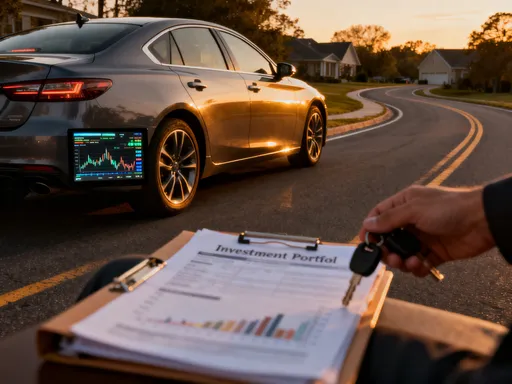
How I Turned Car Savings Into Smart Market Moves
What if the money you set aside for a car could grow while you wait? I stopped seeing my car fund as just savings and started viewing it as a launchpad for smarter moves. It wasn’t about risky bets—it was strategy. By aligning my timeline with market opportunities, I protected my capital while letting it work. Here’s how I balanced readiness with growth, and why timing, flexibility, and discipline made all the difference. This journey wasn’t about chasing quick wins or gambling on unknown stocks. It was grounded in careful planning, realistic expectations, and a commitment to protecting what mattered most: the goal of buying a reliable vehicle without compromising financial stability. Over time, I learned that even short-term savings can be part of a broader financial strategy when approached with clarity and intention.
The Hidden Potential in Your Car Fund
Most people treat a car fund as a static pool of money—an amount tucked away in a savings account, untouched until the day arrives to make a purchase. While this approach ensures safety, it often overlooks an important truth: time is an asset, and even a few years of thoughtful management can yield meaningful results. The car fund, especially when planned for two to five years ahead, occupies a unique space between emergency reserves and long-term retirement accounts. It’s not meant for high-risk speculation, but neither does it need to sit idle earning minimal interest. Recognizing this opens the door to smarter financial behavior—moving from passive saving to active planning.
What sets a car fund apart is its defined purpose and timeline. Unlike retirement savings, which can ride out market cycles over decades, a car purchase has a more immediate horizon. This means investment choices must prioritize both modest growth and capital preservation. Yet, within those boundaries, there is room for strategic decisions that enhance value without jeopardizing the end goal. For instance, parking funds in a standard savings account might protect against loss, but with interest rates often below inflation, real purchasing power can erode over time. That’s where alternative, low-volatility options become worth exploring.
The shift begins with mindset. Instead of asking, “Where can I safely store this money?” the better question becomes, “How can I use this time to work toward my goal more efficiently?” This doesn’t mean diving into complex trading or speculative assets. It means evaluating options that offer slightly better returns while maintaining liquidity and minimizing risk. It also means accepting that the objective isn’t to double the fund, but to optimize it—adding a few hundred or even a few thousand dollars through disciplined, market-aware choices. That incremental gain could cover insurance, maintenance, or even reduce the need for financing.
Importantly, this approach requires honesty about personal comfort with risk. Some individuals prefer the peace of mind that comes from knowing every dollar is secure, and that’s perfectly valid. But for others, especially those with a timeline of three years or more, the opportunity cost of doing nothing may be greater than the risk of modest market exposure. The key is aligning the strategy with both the timeline and the individual’s emotional tolerance for fluctuation. A car fund doesn’t have to be boring or inactive—it can be a practical training ground for broader financial confidence.
Matching Investment Strategies to Your Timeline
One of the most critical factors in managing a car fund is matching the investment approach to the intended purchase date. A strategy that works well for a five-year horizon may be too aggressive for someone planning to buy in 18 months. The general rule is simple: the closer the goal, the more emphasis should be placed on preserving capital. As the timeline shortens, the ability to recover from market downturns diminishes, making stability more important than growth potential.
For those planning to purchase within one to two years, the focus should shift toward low-volatility instruments. High-yield savings accounts, certificates of deposit (CDs), and short-term Treasury securities are common choices because they offer modest returns with minimal risk. These vehicles are typically insured or backed by government guarantees, making them highly secure. While the returns may not be exciting, they often outperform standard savings accounts and protect against inflation more effectively. Additionally, these options provide predictable maturity dates, allowing savers to time access to funds with precision.
When the timeline extends to three to five years, the window opens for slightly more strategic allocation. At this range, investors can consider diversified index funds, especially those tracking broad market benchmarks like the S&P 500. Historical data shows that over three-year periods, the stock market has delivered positive returns in the majority of rolling windows, though past performance is never a guarantee. The longer timeframe allows for some fluctuation, as temporary dips can be absorbed without derailing the ultimate goal. However, exposure should remain measured—perhaps 40% to 60% in equities, balanced with fixed-income assets to cushion volatility.
Dollar-cost averaging can be particularly effective in this context. By investing a fixed amount at regular intervals—say, monthly—over the accumulation period, the average purchase price tends to smooth out market highs and lows. This reduces the risk of investing a lump sum at an inopportune time and instills discipline in the process. It also removes the pressure to time the market perfectly, which even professionals struggle to do consistently. Instead, the focus remains on consistency and alignment with the goal.
Liquidity is another essential consideration. No matter how attractive a return might seem, if the funds aren’t accessible when needed, the strategy fails its primary purpose. Investments should be easily convertible to cash without significant penalties or delays. Mutual funds, exchange-traded funds (ETFs), and certain types of bonds offer this flexibility, whereas locked-in products like long-term CDs or retirement accounts do not. The exit strategy must be as clear as the entry point—knowing when and how to shift back to safer holdings as the purchase date approaches is part of responsible planning.
Where Markets Offer Realistic Openings
Market opportunities don’t come from chasing headlines or following viral trends. They arise from patience, observation, and a clear understanding of one’s own goals. For someone building a car fund, the objective isn’t to outperform the market but to participate in it wisely—capturing modest gains while avoiding unnecessary risks. Realistic openings often appear during periods of market correction, when broad index funds decline due to temporary economic concerns or investor sentiment. These dips, while unsettling in the moment, can present entry points for disciplined savers.
Consider a scenario where a major index drops 10% over a few months due to inflation worries or geopolitical tension. While the news may suggest caution, history shows that markets often recover over time, especially when underlying fundamentals remain strong. For a saver with a three- to five-year horizon, such a dip could be an opportunity to begin or increase contributions to a diversified fund. The key is not predicting the bottom but maintaining a consistent approach that benefits from lower prices over time.
Fixed-income instruments also offer strategic value. When interest rates rise, newly issued bonds and CDs often provide higher yields. Savers who wait for these shifts can lock in better returns without taking on stock market risk. Laddering CDs—spreading investments across multiple maturities—can combine higher yields with periodic access to funds, offering both growth and flexibility. Similarly, Treasury Inflation-Protected Securities (TIPS) can help preserve purchasing power in times of rising prices, making them a sensible addition for longer-term car funds.
Macroeconomic trends can guide decisions without requiring deep expertise. For example, periods of rising interest rates often favor cash-like instruments, while low-rate environments may push conservative investors toward dividend-paying stocks or bond funds for slightly higher income. None of these strategies require picking individual winners. Instead, they rely on broad, diversified exposure that reflects the overall health of the economy. The goal is not to beat the market but to stay aligned with it in a way that supports the car purchase timeline.
Investor sentiment, too, can serve as a useful indicator. When fear dominates headlines and market participation declines, it may signal an oversold condition—an environment where prices are lower than fundamentals suggest. Conversely, when optimism peaks and speculation increases, caution is warranted. Staying informed through reliable financial news sources, rather than social media or sensational outlets, helps maintain perspective. The disciplined saver uses these signals not to react emotionally, but to reinforce a steady, long-term plan.
Protecting Your Goal From Market Swings
Growth is valuable only if the principal remains intact. One of the biggest risks in using a car fund for market participation is emotional decision-making. When markets decline, fear can prompt premature withdrawals, locking in losses and undermining the original goal. Protecting the fund from such swings requires structure—both in investment design and personal mindset. The objective isn’t to eliminate volatility, which is inherent in any market exposure, but to build resilience against its impact.
Diversification is the first line of defense. Even within a short-to-medium-term framework, spreading funds across different asset classes reduces dependence on any single investment. A mix of index funds, bonds, and cash equivalents can balance growth potential with stability. For example, pairing a broad-market ETF with a short-term bond fund creates a buffer: when equities dip, bonds may hold steady or even rise, offsetting losses. This doesn’t guarantee profits, but it reduces the severity of drawdowns.
Dollar-cost averaging, as previously discussed, also serves as a protective mechanism. By investing gradually, the saver avoids the risk of entering the market at a peak. Over time, this strategy smooths the average cost per share, reducing the impact of short-term price swings. It also fosters discipline, turning saving into a routine rather than a reaction to market noise. Automation—setting up recurring transfers from a checking account to an investment vehicle—further removes emotion from the process.
Another protective measure is setting clear review points. Rather than checking balances daily, which can amplify anxiety during downturns, establishing quarterly or semi-annual reviews keeps perspective. At each checkpoint, the saver assesses progress toward the goal, rebalances if necessary, and adjusts allocations as the timeline shortens. For instance, six to twelve months before the intended purchase, shifting from growth-oriented assets to cash or cash-like instruments ensures funds are available and stable when needed.
Stop-loss logic, while common in trading, is less useful for goal-based saving. Selling automatically after a certain drop may lock in losses and prevent recovery. A better approach is to design the portfolio so that losses are limited by allocation, not forced exits. For example, capping equity exposure at 50% inherently limits downside risk. Combined with regular contributions, this structure allows time and compounding to work in the saver’s favor, even through periods of volatility.
Practical Steps to Start Without Overcomplicating
Many people delay taking action because they believe investing requires expertise, large sums, or complex decisions. The truth is, getting started can be simple. The most important step is to begin with a clear understanding of the timeline and the total amount needed. Once those are defined, the path forward becomes much clearer. For example, if a car costing $24,000 is planned for four years from now, and $10,000 has already been saved, the remaining $14,000 can be targeted through a combination of saving and modest growth strategies.
The next step is choosing appropriate vehicles. A brokerage account with access to low-cost index funds and ETFs is a common starting point. Many financial institutions offer robo-advisors that automatically allocate funds based on time horizon and risk tolerance, making the process even easier. Alternatively, a dedicated high-yield savings account or CD ladder can serve as the core, with a portion allocated to market-based options for growth.
Setting review points is essential. Marking the calendar for every six months allows for progress checks without constant monitoring. During these reviews, the saver can assess whether contributions are on track, whether market conditions warrant any rebalancing, and whether personal circumstances have changed. This structured approach prevents impulsive decisions and keeps the focus on the end goal.
Automation enhances consistency. Setting up automatic transfers—say, $300 per month—from a checking account to the chosen investment vehicle ensures steady progress. Over time, these contributions compound, especially when combined with market gains. The power of small, regular actions should not be underestimated. Even a $200 monthly contribution, invested at a modest 4% annual return, can grow by over $2,000 in three years—enough to cover taxes, fees, or accessories.
Common pitfalls should be anticipated. Overtrading—frequently buying and selling in response to market noise—can erode returns through fees and poor timing. Misjudging liquidity needs, such as locking money into long-term instruments too early, can create cash flow problems. The solution lies in simplicity: define the goal, choose appropriate tools, set a rhythm, and stick to the plan. Perfection is not required; consistency is.
When to Step Back and Just Save
There are times when the wisest financial move is to step back and rely solely on traditional savings. High market volatility, unclear personal goals, or emotional uncertainty are all signs that market exposure may do more harm than good. For instance, if a major economic downturn coincides with a planned purchase within the next year, it may be safer to move all funds into insured accounts. Similarly, if the saver feels anxious or distracted by market movements, peace of mind may be worth a slightly lower return.
Recognizing these moments is not a failure—it’s a sign of financial maturity. The ability to say, “This isn’t the right time,” demonstrates self-awareness and discipline. It reflects an understanding that the primary goal is not to maximize returns, but to achieve the car purchase safely and on time. Sometimes, the most strategic decision is to prioritize certainty over potential gain.
Traditional savings accounts, while offering lower returns, provide unmatched security and immediate access. For those with less than two years until purchase, or those who value predictability above all, these accounts remain a strong choice. Short-term CDs, money market accounts, and Treasury bills offer slightly better yields with minimal risk, making them ideal for the final phase of accumulation.
The decision to avoid the market should be based on objective criteria, not fear alone. If the timeline is short, if risk tolerance is low, or if financial priorities are shifting, stepping back is not a retreat—it’s a recalibration. It preserves capital, reduces stress, and keeps the goal within reach. Financial planning is not a straight line; it requires adaptability and honesty about one’s own limits.
Building a Mindset for Future Financial Wins
The lessons learned from managing a car fund extend far beyond a single purchase. They form the foundation of lasting financial confidence. The discipline of setting a goal, aligning actions with timelines, and resisting emotional impulses applies to larger objectives like home buying, education funding, or retirement planning. Each small win reinforces the belief that thoughtful choices lead to real progress.
Patience, often undervalued, emerges as a powerful tool. Markets fluctuate, but time and consistency smooth out the bumps. Intentionality—making decisions based on purpose rather than impulse—transforms everyday actions into long-term gains. These habits don’t require large sums or expert knowledge. They begin with a simple choice: to engage with money deliberately.
Wealth is not built overnight. It grows through repeated, smart decisions—choosing growth when appropriate, protecting capital when necessary, and knowing when to do nothing at all. The car fund becomes more than a means to a vehicle; it becomes a practice ground for financial wisdom. And as one goal is achieved, another can begin—with greater clarity, confidence, and control.