Sapporo’s Soul on a Plate: How Slowing Down Transformed My Food Journey
You know that feeling when you’re rushing through a trip, ticking boxes, but missing the soul of a place? In Sapporo, I finally slowed down—and it changed everything. Instead of hopping between tourist spots, I wandered local markets, lingered over steaming bowls of ramen, and shared meals with people who knew the city’s heartbeat. This isn’t just about what I ate—it’s about how taking time turned dining into a deep connection with Japan’s northern gem. Food became my compass, guiding me not just to flavors, but to moments of stillness, conversation, and belonging. In a world that often measures travel by distance covered, Sapporo taught me to measure it by depth felt.
The Shift to Slow Travel in Sapporo
Travel has long been framed as a race—how many landmarks can you see, how many dishes can you sample, how many photos can you post in a single day? But in Sapporo, a quiet transformation began. The city, nestled on Japan’s northern island of Hokkaido, carries a rhythm unlike Tokyo’s urgency or Kyoto’s curated elegance. Here, the pace is steadier, shaped by cold winters, open skies, and a culture that values seasonality and simplicity. It was the perfect setting to embrace slow travel—not as a trend, but as a return to presence. Slow travel is not merely about moving less; it’s about engaging more. It means staying in one neighborhood long enough to recognize the shopkeeper’s smile, to learn the best time to visit the fish counter, to return to the same bench in Odori Park with a thermos of tea and watch the light change.
My shift began on the second morning, when I abandoned my packed itinerary. Instead of rushing to the Sapporo TV Tower by 9 a.m., I followed the scent of grilled seafood down a side street toward Nijo Market. There, time slowed. Vendors called out greetings, not sales pitches. An elderly woman handed me a sample of salted sea urchin on a cracker, her eyes crinkling as she watched my reaction. I stood there, not as a tourist, but as a guest. That moment became a turning point. I realized that checklist tourism had been feeding my camera, not my curiosity. In Sapporo, meals were no longer pit stops between attractions—they became the attractions themselves. Each dish carried a story, a season, a connection. And to hear it, I had to sit still long enough to listen.
What made Sapporo especially conducive to this change was its balance of accessibility and authenticity. While it is a modern city with efficient subways and clear signage for visitors, it does not cater exclusively to tourism. Life here unfolds at a human scale. Locals shop at neighborhood markets, commute on bicycles even in winter, and take pride in their regional specialties. This groundedness invited me to do the same—to shed the urgency of being elsewhere and to settle into being here. The result was not just a more relaxed trip, but a richer one. By slowing down, I didn’t see less of Sapporo. I saw more of its soul.
Morning Rituals: Markets and Miso Soup
There is a particular magic in being awake when a city wakes up. At 7 a.m. in Sapporo, the air is crisp, the streets are quiet, and the market lights flicker to life like fireflies. Nijo Market, stretching just a few blocks near the Nakajima Park area, is where the city’s culinary heart begins to beat. Unlike the sprawling Tsukiji of Tokyo, Nijo is intimate—cozy rows of stalls under a low canopy, each one a small kingdom of freshness. The scent hits first: briny sea spray, smoky grills, the sweetness of steamed corn. Then come the sounds—the sizzle of scallops on hot metal, the rhythmic thud of a fishmonger’s knife, the warm banter between neighbors grabbing breakfast before work.
I made it my ritual to visit every morning, not with a checklist, but with an open mind. One day, I watched a vendor shuck fresh Hokkaido oysters with swift precision, serving them on the half-shell with a squeeze of lemon and a dab of wasabi mayo. Another morning, I lingered at a tiny counter where an older couple served miso soup so rich it felt like a hug in a bowl. The broth was deep amber, flecked with clams, seaweed, and soft cubes of tofu. With it came a small dish of pickled vegetables and a wedge of grilled salmon. This was not a performance for tourists—it was breakfast as it’s lived by locals, simple and deeply nourishing.
What struck me most was the respect embedded in every interaction. Vendors didn’t rush. They explained, smiled, offered samples. When I pointed hesitantly at a strange-looking shellfish, the woman at the counter didn’t just name it—she told me how her father used to dive for it in the Sea of Japan. That moment wasn’t just about food; it was about memory, about place. For visitors, the best time to come is between 7:00 and 8:30 a.m., when the market is lively but not crowded. Come hungry, come curious, and come ready to engage. Try the grilled scallops, the ikura don (salmon roe over rice), and a hot cup of freshly brewed green tea. And don’t be afraid to point, to smile, to say “oishii” (delicious) when something surprises you. In Sapporo, kindness is served with every dish.
Ramen Beyond the Bowl: The Story of Sapporo’s Signature Dish
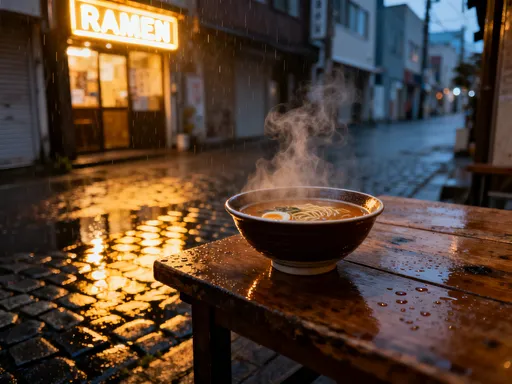
No journey through Sapporo’s food culture is complete without confronting its most famous export: Sapporo ramen. But to call it merely “famous” is to miss the point. This is not just a noodle soup—it’s a cultural emblem, born from the city’s cold climate and hearty appetites. Unlike the delicate shoyu ramen of Tokyo or the rich tonkotsu of Fukuoka, Sapporo ramen is bold, robust, and deeply comforting. Its signature is a thick, opaque miso broth, simmered for hours with pork bones, vegetables, and fermented soybean paste. Topped with butter, corn, bean sprouts, and tender slices of chashu pork, it’s a bowl built for winter, for warmth, for sustenance.
I sought out a small, unassuming shop in the Susukino district, far from the neon glow of the main drag. The sign was faded, the counter worn smooth by decades of elbows. Inside, an elderly chef worked in near silence, his movements precise, almost meditative. This was not a franchise. It was a family legacy, passed down from his father, who opened the shop in 1958. As I waited, I watched him stir the broth, taste it, adjust the seasoning with a pinch of salt. He didn’t rush. He didn’t glance at the clock. He listened to the soup.
When my bowl arrived, it was a masterpiece of balance—steaming, fragrant, layered with flavor. The first sip was earthy and deep, the miso singing with umami. The butter melted into the broth, adding a creamy richness. The corn, sweet and fresh, offered a surprising pop of sweetness. I ate slowly, deliberately. This was not fuel. It was a ceremony. And in that slowness, I understood something essential: Sapporo ramen is not meant to be consumed quickly. It is meant to be savored, to be felt in the chest as warmth spreads. The chef later told me, through a translator, that he believes “a good bowl of ramen should take as long to eat as it did to make.” That philosophy—of patience, of care, of presence—was in every spoonful.
Lunch with Locals: Hidden Izakayas and Shared Plates
By midday, Sapporo reveals another layer of its dining soul: the izakaya. These casual Japanese pubs are more than places to drink—they are community hubs, where office workers unwind, friends reconnect, and strangers become companions over shared small plates. I stumbled upon one tucked down a narrow alley in the Nakasu district, its red lantern barely visible from the main street. Inside, it was warm, dimly lit, and full of laughter. A group of salarymen clinked glasses of beer, while an older couple shared a plate of grilled squid and sipped warm sake.
I took a seat at the counter, where the owner, a woman in her sixties with a no-nonsense demeanor and a kind smile, handed me a simple menu written in Japanese. I pointed to a few items, and she nodded, adding a few recommendations of her own. What arrived was a parade of small delights: tender yakitori skewers, crispy karaage chicken, a delicate dish of simmered daikon, and a plate of fresh sashimi so translucent it looked like sea glass. With each dish came a new conversation—broken English, gestures, shared smiles. One man offered me a sip of his umeshu, a sweet plum liqueur. Another showed me how to properly dip my edamame in salt.
What made this experience unforgettable was not just the food, but the rhythm of it. No one was in a hurry. Dishes arrived when they were ready. Conversations ebbed and flowed. The owner refilled my tea without being asked. Time expanded. In that small space, I wasn’t a visitor—I was part of the moment. For travelers, finding such places requires stepping off the beaten path, walking past the glossy tourist menus, and following the locals. Look for izakayas with worn tatami mats, handwritten signs, and the sound of laughter spilling into the street. And when you find one, stay awhile. Order slowly. Share generously. Let the meal unfold as it should.
Afternoon Pauses: Tea, Sweets, and the Art of Rest
In a culture that prizes efficiency, Japan also holds a quiet reverence for stillness. The concept of *yuukyuu*—leisure, free time, unstructured rest—is not seen as laziness, but as necessary balance. In Sapporo, this philosophy finds expression in the afternoon tea ritual, a pause between the busyness of morning and the quiet of evening. I discovered a small tea house near Maruyama Park, a wooden building with sliding doors and a garden of moss and stone. Inside, the air was scented with roasted hojicha and fresh matcha.
I was greeted by a woman in a simple kimono, who led me to a low table by the window. She served me a bowl of Hokkaido milk tea, made with locally sourced dairy so rich it needed no sugar. With it came a plate of handmade mochi—chewy rice cakes filled with red bean paste, lavender cream, and fresh strawberry. Each bite was a celebration of the region’s bounty. The lavender came from Furano, just a train ride away. The strawberries were in season, plump and fragrant. The mochi was made that morning, pounded in the traditional way.
As I sat there, sipping tea and watching leaves drift from the maple tree outside, I felt a deep sense of calm. This was not just a snack—it was an act of mindfulness. In a world that glorifies constant movement, Sapporo offered me permission to stop. To breathe. To taste. The tea house did not advertise. It did not have a website. It existed because people still valued this kind of pause. For visitors, such moments are not found in guidebooks, but in wandering, in noticing, in saying yes to the unexpected. Seek out quiet corners, small cafes, neighborhood bakeries. Let your afternoon unfold slowly. Let your tea grow cold if you need to. In that stillness, you may find the most nourishing part of your journey.
Dinner as Ceremony: Kaiseki with a Northern Touch
If breakfast was discovery, lunch was connection, and afternoon tea was rest, then dinner in Sapporo became ceremony. I was invited to a modest restaurant in the Moiwa district, known for its Hokkaido-inspired kaiseki—a multi-course meal that traces the seasons through local ingredients. Unlike the elaborate kaiseki of Kyoto, this version was simpler, humbler, but no less profound. Each dish was a reflection of the north: the cold sea, the fertile soil, the long winter nights that demand warmth and care.
The meal began with an appetizer of pickled vegetables and a delicate chawanmushi (savory egg custard) infused with uni (sea urchin) from the coast. Next came a sashimi platter featuring salmon, ikura, and squid, all caught within 100 kilometers. Then a grilled dish of miso-marinated cod, its skin crisp, its flesh flaky and rich. Each course was presented with quiet elegance—on handmade ceramics, with seasonal garnishes, arranged like art. The chef, who also served as host, moved through the room with silent grace, explaining each dish in soft tones.
What struck me was the pacing. There were no gaps, no rush. Each dish arrived when the previous one had been fully appreciated. Silence was not awkward—it was honored. We ate slowly, spoke softly, allowed the flavors to linger. This was not dining as consumption, but as contemplation. The final course, a warm bowl of rice with pickled plum and a small bowl of miso soup, felt like a return to center. As I bowed in thanks, I realized that this meal had not just fed my body—it had quieted my mind. In a world of fast food and faster lives, kaiseki reminded me that eating can be an act of reverence.
Why Sapporo’s Dining Culture Rewires Travel Mindset
Leaving Sapporo, I carried more than souvenirs. I carried a new way of moving through the world. The city had not just shown me its flavors—it had reshaped my relationship with time, with presence, with connection. In a single week, I had eaten in seven different settings, yet I had visited only a handful of places. I had returned to the same market, the same ramen shop, the same tea house. And each return felt deeper, richer, more meaningful. This is the power of slow dining: it turns food into a thread that weaves through a place, connecting you to its people, its seasons, its spirit.
The lessons extend far beyond Sapporo. They are practical, accessible, and deeply human. Choose fewer destinations. Stay longer. Eat where locals eat. Learn a few words of the language. Smile. Say thank you. Ask questions. Let a meal take an hour when it needs to. These are not grand gestures—they are small acts of attention that transform travel from sightseeing to soul-seeing. Sapporo taught me that the most memorable moments are not the ones captured in photos, but the ones felt in silence, shared in warmth, tasted in stillness.
And so, I return home not just with memories of miso ramen and fresh seafood, but with a quieter heart and a fuller mind. Sapporo didn’t just feed me. It taught me how to truly taste a place—not with my tongue alone, but with my entire being. In a world that moves too fast, that lesson is the most precious souvenir of all.