You Won’t Believe What I Found in Killarney’s Wild Heart
Have you ever stood somewhere so untouched it felt like the world was holding its breath? That’s Killarney. Beyond the postcard views lies a raw, living landscape—lush valleys, misty lakes, and ancient woodlands that pulse with quiet energy. I went searching for peace and found something deeper: a place where nature doesn’t just surround you—it speaks. This is not just a trip. It’s a conversation with the wild.
Arrival in Killarney: First Impressions Beyond the Guidebooks
As the winding roads ease into County Kerry, the air changes. It carries the scent of damp earth, pine, and something faintly floral—perhaps wild thyme clinging to stone walls. Killarney does not announce itself with fanfare. There are no grand gateways or towering signs. Instead, the town reveals itself gradually: a cluster of colorful buildings nestled between rolling hills, where sheep graze lazily on emerald pastures and the sound of distant church bells blends with birdsong.
What strikes first-time visitors is how effortlessly Killarney balances charm and authenticity. Unlike some tourist destinations that feel curated for cameras, this Irish town breathes with a quiet rhythm of its own. Locals chat outside cafés with steam rising from their mugs, children ride bikes down cobbled lanes, and shop windows display hand-knit woolens and artisanal jams. Yet just beyond the last row of cottages, the wilderness begins—no buffer, no fence, just an invitation.
The transition from town to trail is seamless. A short walk from the central square leads to tree-lined paths that open into sweeping vistas of forest and water. This immediacy is rare. In many places, nature feels like an attraction you must travel to reach. In Killarney, it feels like you’ve stepped into its living room. The absence of noise pollution, the soft hush of wind through oak leaves, the occasional call of a heron—it all signals that you are entering a different kind of space, one governed not by schedules but by seasons.
Travelers often come expecting beauty, but they stay for the stillness. There’s a humility in how Killarney presents itself—not as a spectacle, but as a sanctuary. And from the moment you arrive, you sense that this is not a place to conquer or consume, but to receive.
The Crown Jewel: Exploring Killarney National Park
At the heart of this region lies Killarney National Park, a 10,236-hectare expanse that is as ecologically rich as it is visually stunning. Established in 1932 and later designated a UNESCO Biosphere Reserve, the park is one of Ireland’s oldest and most treasured protected areas. It’s not just a scenic escape—it’s a living laboratory of biodiversity, where ancient woodlands, mountain ranges, and freshwater ecosystems converge in rare harmony.
The park’s most remarkable feature is its native oak and yew woodlands, some of the last remaining in Western Europe. These forests are not manicured or pruned; they are wild, tangled, and teeming with life. Moss blankets the bark of centuries-old trees, ferns unfurl in the understory, and lichens drape from branches like delicate lace. This is not a forest you walk through—it’s one you feel, with every breath carrying the damp, earthy scent of decomposition and renewal.
Within the park stands the Muckross Estate, a 19th-century mansion surrounded by formal gardens, farm buildings, and working heritage animals. While the estate offers a glimpse into Ireland’s landed past, it is also a bridge between history and ecology. The surrounding lands, once used for grazing and forestry, have been carefully restored to support native species. Today, the estate serves as an educational hub, where visitors learn about sustainable land use and traditional farming methods that coexist with conservation.
What makes Killarney National Park truly exceptional is its range of habitats in such close proximity. Within a few kilometers, you can move from wetland to mountain, from deciduous forest to open moorland. This diversity supports an array of plant and animal life, including rare species like the Irish red deer, the Kerry slug, and the native whitebeam tree, found nowhere else on Earth. The park is not just a place to visit—it’s a vital refuge, a stronghold for species under pressure elsewhere.
For travelers, the park offers more than scenic trails. It offers perspective. Walking through these ancient woods, you begin to understand that conservation is not about preserving the past, but protecting the future. Every rustle in the underbrush, every ripple on a hidden lake, reminds you that this land is alive—and that its survival depends on mindful stewardship.
Lakes That Breathe: The Magic of Lough Leane, Muckross, and Upper Lake
The soul of Killarney flows through its three great lakes—Lough Leane, Muckross Lake, and Upper Lake—each with its own character, yet bound together by water, light, and silence. These are not stagnant bodies of water, but dynamic, breathing entities that shape the climate, support wildlife, and reflect the ever-changing Irish sky.
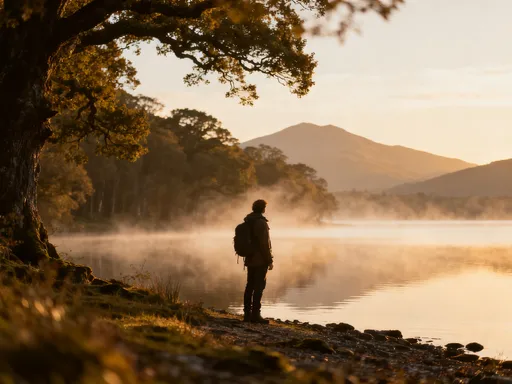
Lough Leane, the largest and lowest of the three, is the most accessible and perhaps the most enchanting. At dawn, a silver mist hovers above its surface, dissolving slowly as the sun rises. Swans glide across its glassy expanse, their necks arched like parentheses, while herons stand motionless at the water’s edge, waiting for the flicker of a fish. Boat tours depart regularly from Ross Island, offering views of small islands that hold the ruins of ancient monasteries—silent witnesses to centuries of spiritual retreat.
Muckross Lake, narrower and deeper, cuts through the landscape like a ribbon of polished steel. Surrounded by steep hills and dense forest, it feels more secluded, almost secretive. On calm days, the reflection of the MacGillycuddy’s Reeks is so perfect it’s hard to tell where mountain ends and water begins. Kayakers and rowers often glide silently across its surface, their oars dipping without a splash, as if not to disturb the stillness.
Then there is Upper Lake, the wildest and most remote. Reached by a narrow road or a long hike, it opens like a hidden chamber in the earth. Its shores are rugged, its waters cold and clear. Otters have been spotted here, slipping soundlessly between rocks, and peregrine falcons nest in the cliffs above. In autumn, the surrounding hills blaze with color—gold, crimson, and amber—as the rowan and oak trees prepare for winter.
These lakes do more than dazzle the eye. They create microclimates that allow rare plants to thrive. The constant moisture supports mosses and liverworts that grow nowhere else in Ireland. The lakes also serve as crucial habitats for fish like brown trout and Atlantic salmon, whose spawning cycles are carefully monitored by conservationists. Even the air feels different near the water—cooler, cleaner, charged with a quiet vitality.
For visitors, a journey across these lakes is not just a scenic tour. It’s a meditation. The rhythm of the water, the play of light, the silence broken only by the call of a curlew—these moments slow time. They remind us that beauty is not always loud or dramatic. Sometimes, it is a whisper, a reflection, a breath held in reverence.
Mountains That Watch: Hiking the MacGillycuddy’s Reeks
Rising like sentinels to the west of the lakes, the MacGillycuddy’s Reeks are Ireland’s highest mountain range, home to Carrauntoohil, the nation’s tallest peak at 1,038 meters. These mountains do not invite casual climbers. They demand respect, preparation, and a willingness to embrace the unpredictable Irish weather. Yet for those who approach them with care, the rewards are profound.
The most accessible entry point is the Gap of Dunloe, a narrow glacial valley carved between the Purple Mountains and the Reeks. This five-kilometer pass can be traversed on foot, by bicycle, or via traditional jaunting car—a horse-drawn carriage that adds a touch of old-world charm. The path winds between towering rock walls, with a narrow river flowing alongside. At points, the valley opens into small lakes, where the water glows an otherworldly blue-green, fed by underground springs.
For more experienced hikers, trails leading into the Reeks offer challenging but deeply rewarding experiences. The route up Mangerton Mountain, for example, begins gently through pine forest before ascending into open moorland. As you climb, the landscape transforms—trees give way to heather, then to bare rock and sky. Reaching the summit on a clear day delivers a panorama that stretches from the Atlantic coast to the inland valleys. You can see the patchwork of fields, the shimmer of lakes, and the distant curve of the Dingle Peninsula.
Yet the true magic of these mountains lies not just in the views, but in the sense of solitude they offer. Even on busy days, a short detour off the main trail can bring you to a place where the only sound is the wind and the crunch of gravel underfoot. There is a quiet dignity in these peaks, as if they have watched over this land for millennia and will continue to do so long after we are gone.
Preparation is essential. Hikers should wear waterproof gear, carry maps or GPS devices, and check weather forecasts before setting out. The Irish mountains are not dangerous if treated with respect, but they do not forgive carelessness. Sudden fog, rain, or dropping temperatures can turn a pleasant walk into a serious situation. Park rangers and local guides emphasize the importance of staying on marked trails and letting someone know your plans.
But for those who come prepared, the mountains offer more than exercise. They offer clarity. Standing atop a ridge, looking out over a land shaped by ice and time, you feel both small and connected—small in the face of such scale, yet deeply part of something ancient and enduring.
Hidden in Plain Sight: Off-the-Beaten-Path Nature Spots
While the main attractions draw well-deserved attention, some of Killarney’s most moving experiences happen in quieter corners—places not marked on every map, but known to those who walk slowly and listen closely. These are not secret locations in the sense of being hidden or forbidden, but rather spots that reveal themselves only to the patient traveler.
One such place is the riverside path near Ross Castle, where the Deenagh River slips quietly through alder trees and reeds. Early in the morning, before the tour buses arrive, you might see a kingfisher dart across the water, its blue-green flash gone in an instant. The trail is unpaved, uneven in places, but it invites a slower pace—one that allows you to notice the way sunlight filters through leaves, or how the bark of an old willow twists like braided rope.
Another quiet stretch lies along the lower slopes of Torc Mountain. While many visitors take the well-maintained path to Torc Waterfall, fewer continue beyond it into the network of forest trails that climb gently into the hills. Here, the sound of crowds fades, replaced by the rustle of pine needles and the occasional call of a wren. Benches placed at intervals invite rest, not just for the body, but for the mind.
There are also lesser-known viewpoints—simple clearings where the trees part and the landscape unfolds below. You won’t find railings or information boards here, just a natural opening that frames the lakes and distant peaks like a living painting. These spots are not advertised because they don’t need to be. They exist for those who wander with curiosity and leave no trace.
Finding these places requires no special equipment, only intention. It means choosing to walk instead of drive, to pause instead of rush. It means looking not just at the view, but at the details—the pattern of lichen on a stone, the way a spiderweb glistens with dew, the faint track of a fox in soft earth.
Slow travel is not a trend in Killarney—it’s a necessity. The deeper beauty of this landscape reveals itself only over time, in moments of stillness. And in a world that often feels too loud and too fast, these quiet corners offer something rare: the chance to remember what it feels like to simply be.
Wildlife Encounters: From Red Deer to Rare Birds
One of the most unforgettable experiences in Killarney National Park is encountering its wildlife—not in cages or enclosures, but in the wild, where animals move freely and on their own terms. The most iconic of these is the Irish red deer, a subspecies that has roamed these hills for thousands of years. Herds can often be seen grazing in the early morning or late afternoon, their silhouettes stark against the misty slopes of the Reeks.
These deer are not tame, nor should they be approached. They are semi-wild, accustomed to human presence but not dependent on it. Observing them from a distance—through binoculars or a long camera lens—allows for a respectful connection. There is a solemn beauty in watching a stag raise his head, ears twitching, alert to the wind. It is a reminder that we are guests in their world.
Beyond the deer, the park supports a rich variety of animals. Otters, elusive and nocturnal, leave behind telltale signs—slide marks in the mud, fish bones near riverbanks. Peregrine falcons nest in the high cliffs, diving at incredible speeds to catch prey. Pine martens, once nearly extinct in Ireland, are making a quiet comeback, their presence detected through camera traps and occasional sightings at dusk.
Birdwatchers will find plenty to admire. The lakes are home to mute swans, great crested grebes, and whooper swans that migrate from Iceland each winter. In the woodlands, you might hear the drumming of a woodpecker or catch a glimpse of a pied flycatcher, its black-and-white plumage flashing between branches. Even common species—the robin, the wren, the blackbird—sing with a clarity that feels amplified by the clean air.
Conservation plays a vital role in protecting these species. Park authorities work with scientists to monitor populations, restore habitats, and control invasive plants and animals. Visitors are encouraged to follow guidelines: stay on trails, keep dogs on leashes, avoid feeding wildlife. These simple actions help maintain the delicate balance that allows rare species to thrive.
Seeing an animal in the wild is never guaranteed, and that is part of its power. When it happens, it feels like a gift—a moment of connection across species, a reminder that we share this planet with creatures just as alive, just as worthy of this land.
Why This Landscape Matters: Nature as Heritage
Killarney is more than a destination. It is a testament to what happens when a community chooses to protect its natural heritage. The preservation of its forests, lakes, and mountains is not just about scenery—it is about identity, resilience, and responsibility. This landscape has shaped Irish culture for centuries, inspiring poets, musicians, and storytellers. It has sustained communities through farming, fishing, and forestry. And now, it sustains visitors seeking peace, beauty, and renewal.
But preservation requires more than government action. It requires participation. Every traveler who walks the trails with care, who respects wildlife, who chooses to leave no trace, becomes part of the solution. Sustainable tourism is not a slogan here—it is a practice, woven into the way local businesses operate, from eco-friendly accommodations to guided tours that emphasize education over entertainment.
When you visit Killarney with intention, you do more than see nature. You support it. Your entrance fee to the national park funds conservation programs. Your choice to eat at a local café supports families who have lived here for generations. Your decision to walk instead of drive reduces your impact. These small acts, multiplied by thousands, create a ripple effect that helps protect this place for the future.
And in return, Killarney offers something priceless: a chance to remember your place in the natural world. Not as a conqueror, not as a consumer, but as a guest. To stand on a hillside and feel the wind, to watch a deer move through the mist, to sit by a lake as the sun sets—these are not just experiences. They are invitations to listen, to breathe, to belong.
So come to Killarney not for the photos, but for the presence. Come to walk quietly, to look closely, to feel deeply. Because in the wild heart of this land, you may just find a deeper part of yourself.