You Won’t Believe What I Found in the Serengeti – Art in the Wild
When you think of the Serengeti, chances are you picture lions, migration, and endless golden plains—not art spaces. But during my trip, I stumbled upon something unexpected: creative expressions hidden in plain sight. From Maasai cultural centers to open-air murals, art thrives here in ways few travelers notice. Yet, many miss it completely or fall into common traps. Let me take you beyond the safari clichés.
The Unexpected Canvas: Discovering Art in a Wildlife Icon
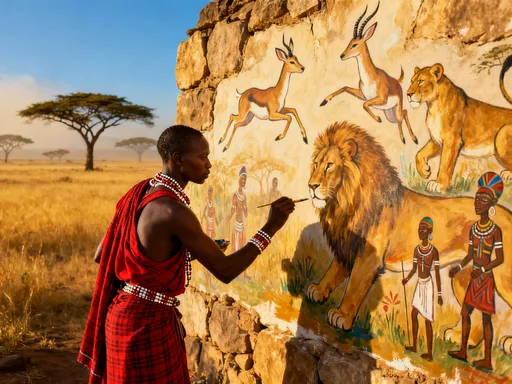
The first time I saw a painted giraffe on a mud wall just outside Seronera, I thought it was a trick of the light—some mirage born of heat and dust. But as I stepped closer, the details emerged: swirling patterns along its neck, ochre and indigo stripes mimicking traditional Maasai shukas, and eyes that seemed to follow me. This was no illusion. It was art, rooted deeply in place, yet almost invisible to the thousands who pass through the Serengeti every year chasing the Big Five. The surprise wasn’t just that art existed here—it was how seamlessly it blended into the landscape, like another species adapted to survive in this vast wilderness.
What I discovered was a quiet network of creative spaces—small community-run cultural centers, open-air galleries framed by acacia trees, and family workshops where hands shaped beads, carved wood, or stretched canvas under the sun. These weren’t satellite outposts of urban galleries but expressions born from generations of storytelling, ritual, and daily life. In the shadow of one of the world’s most famous ecosystems, human creativity was flourishing in ways that rarely made it into travel brochures or safari itineraries.
Yet, most visitors never see it. The narrative around the Serengeti remains overwhelmingly focused on wildlife. Migration routes, predator behavior, and the drama of survival dominate the imagery. This isn’t accidental—safari marketing has long prioritized animals over people, reinforcing the myth of a pristine, untouched wilderness. In doing so, it often erases the very communities who have lived alongside these animals for centuries. The irony is that the Serengeti is not just a natural wonder; it is also a cultural landscape, shaped by human presence, knowledge, and artistry.
My first meaningful encounter was at a small compound near the Ngorongoro Conservation Area entrance. There, a group of women welcomed me into a circular enclosure where beaded necklaces hung like rainbows on drying lines. One elder, her face lined with wisdom and her ears stretched with traditional discs, held up a necklace and explained the meaning behind its colors—red for bravery, white for purity, blue for energy, green for the land. Each piece was a language, a story passed down through daughters and granddaughters. In that moment, I realized I wasn’t just looking at craftwork—I was witnessing a living archive of identity and resilience.
Why Art Spaces Matter in the Serengeti Experience
Art in the Serengeti is far more than decoration. It is a vital thread in the fabric of cultural survival. For the Maasai and other indigenous groups, creative expression is not separate from life—it is woven into it. Beadwork, song, dance, body painting, and mural art are all forms of storytelling that preserve history, transmit values, and assert identity in a rapidly changing world. When travelers engage with these art forms, they are not merely observing tradition—they are participating in an ongoing act of cultural resilience.
Consider the symbolism embedded in Maasai beadwork. Every color, pattern, and arrangement carries meaning. A zigzag might represent the path of life, full of challenges and turns. A triangle could symbolize the family unit—mother, father, and child. These designs are not random; they are visual proverbs, teaching lessons about community, courage, and connection to the earth. When tourists understand this depth, a simple bracelet becomes more than a souvenir—it becomes a bridge between worlds.
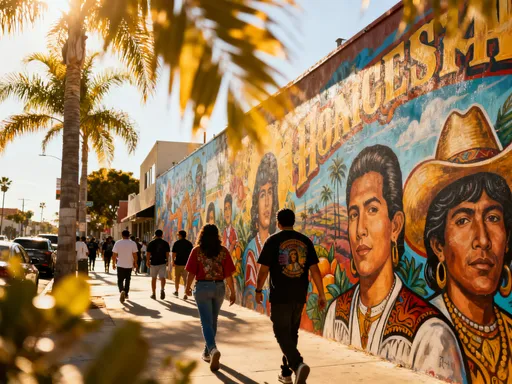
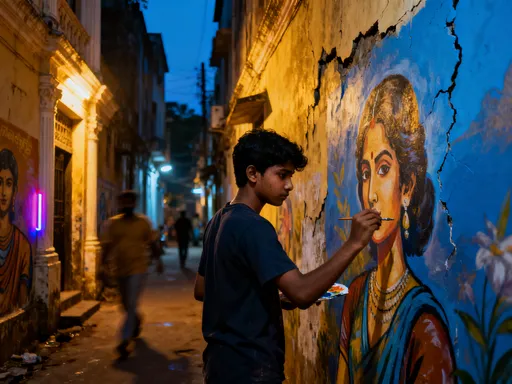
Similarly, murals in community centers often depict scenes of coexistence—elephants walking near bomas, children learning from elders, warriors protecting wildlife. These are not idealized fantasies but reflections of real values: respect for nature, intergenerational wisdom, and the belief that humans and animals belong to the same ecological family. In a region where conservation is often framed as a conflict between people and parks, such art offers a powerful counter-narrative—one of harmony, not opposition.
Dance, too, is a living art form that transforms public spaces into stages of cultural memory. The adumu, or jumping dance, performed by Maasai warriors, is not just a spectacle for tourists. It is a ritual of strength, discipline, and communal pride. The rhythmic chants, the precise movements, the way the dancers seem to defy gravity—all of it is choreographed expression, passed down orally and physically through generations. To witness it is to feel the pulse of a culture that refuses to be silenced by modernity.
Engaging with these art forms changes the nature of travel. It shifts the experience from passive observation to active connection. Instead of merely photographing a lion from a vehicle, you might sit with an artist who paints that lion not as a trophy, but as a guardian spirit. This kind of encounter fosters empathy, deepens understanding, and leaves a lasting imprint far beyond the typical safari snapshot. It reminds us that travel is not just about seeing new places—it’s about seeing them anew.
Common Pitfalls Tourists Face When Seeking Art
Despite the richness of artistic life in the Serengeti region, many travelers miss it entirely—or worse, engage in ways that do more harm than good. One of the most common mistakes is limiting cultural experiences to commercial craft markets near park entrances. While these markets offer colorful items, they often prioritize volume over authenticity. Mass-produced beadwork, imported fabrics, and generic carvings dominate, with little connection to the creators’ actual traditions. Buying from these stalls may feel like supporting local artisans, but the profits rarely reach the hands that made them.
Another trap is treating art as mere decoration—something to be collected, not understood. Tourists may purchase a beaded necklace without ever learning its meaning, or snap a photo of a mural without asking who painted it or why. This extractive approach reduces living traditions to commodities, stripping them of context and dignity. It turns culture into a performance for consumption, rather than a dynamic, evolving practice.
Perhaps the most troubling issue is the rise of so-called cultural centers that operate more like tourist traps than genuine community spaces. Some are run by outside investors who pay locals minimal wages to perform dances or display crafts, all while branding the experience as “authentic.” These operations often lack transparency, with little reinvestment into the community. Visitors may leave feeling they’ve had a meaningful experience, unaware that their money supported exploitation rather than empowerment.
Timing can also undermine even well-intentioned visits. Many authentic art spaces operate on local rhythms, not tourist schedules. A community workshop might only gather on certain days, or an artist may be tending livestock when a tour group arrives. Showing up unannounced, especially without a local guide, risks disappointment—and worse, disrespect. It sends the message that visitors expect culture to be available on demand, like a theme park attraction.
To avoid these pitfalls, travelers must shift their mindset. Instead of treating cultural art as a side attraction to the main event of wildlife viewing, they should approach it with the same curiosity, patience, and respect. This means doing research in advance, asking questions with humility, and being willing to adapt plans. It means understanding that authenticity isn’t about spectacle—it’s about relationship.
How to Find the Real Deal: Authentic Art Spaces Off the Beaten Path
Finding genuine art spaces in the Serengeti region requires intention and care. The key is to look beyond the main tourist circuits and seek out initiatives that are community-led, transparent, and deeply rooted in local life. One reliable starting point is cooperatives—especially those run by women’s groups or youth collectives. These organizations often emerge from grassroots efforts to preserve culture while generating sustainable income. Visiting them supports economic independence and ensures that benefits stay within the community.
Many of these cooperatives are located near the boundaries of protected areas, where residents maintain strong ties to both land and tradition. A visit to one such cooperative near the western corridor of the park revealed women crafting intricate beadwork while sharing stories about their ancestors’ journeys. The space doubled as a cultural education center, where children learned traditional songs and elders recorded oral histories. This integration of art, education, and daily life is a hallmark of authenticity.
Another effective way to access real art experiences is through guided cultural walks. Unlike standard safari tours, these walks are often led by local guides who are themselves members of the community. They don’t just point out landmarks—they share meanings, introduce artists, and facilitate conversations. On one such walk, I met a muralist who had transformed the walls of his village school into a visual encyclopedia of local wildlife and folklore. He spoke passionately about using art to teach environmental stewardship, showing how creativity and conservation can grow together.
Studio visits, when arranged respectfully, offer another window into the creative process. Watching an artist mix natural pigments, stretch a hide, or string beads with practiced fingers provides insight no photograph can capture. These moments reveal the time, skill, and intention behind each piece. They also create space for exchange—when travelers ask thoughtful questions and listen with openness, artists often feel seen and valued in ways that go beyond financial support.
The role of the guide cannot be overstated. A knowledgeable, ethical guide acts as both translator and gatekeeper, ensuring that visits are welcomed, not intrusive. They understand local protocols, know which spaces are open to visitors, and can facilitate introductions that honor cultural norms. Choosing a tour operator that partners with community-based organizations—rather than one that treats culture as an add-on—is a critical step toward responsible engagement.
Maximizing Your Visit: Timing, Etiquette, and Engagement
Once you’ve identified an authentic art space, how you engage matters as much as where you go. Timing is essential. Early mornings or late afternoons are often the best times to visit, when artists are most likely to be present and the light is ideal for viewing and photographing work. Avoid holidays or ceremonial periods unless you’ve been explicitly invited—these are private moments, not performances.
Respectful photography is another crucial consideration. Always ask permission before taking photos of people, especially elders or children. Some artists may allow photos of their work but not of themselves, and that boundary should be honored. When photographing murals or installations, take time to capture details—the brushstrokes, the texture of the wall, the way the art interacts with its surroundings. These images tell richer stories than wide-angle shots alone.
When interacting with artists, approach with humility. Begin by listening. Ask open-ended questions: What inspired this piece? What does this color mean? How long did it take to make? Avoid phrases like “That’s so exotic” or “You’re so traditional,” which can carry condescending overtones. Instead, express appreciation in ways that acknowledge skill and intention: “Your attention to detail is incredible,” or “I can feel the story in this work.”
Supporting artists fairly is both an ethical and practical concern. If you wish to purchase something, ask about pricing directly and avoid aggressive bargaining, especially in community cooperatives where prices are often set collectively. Remember that these items are not mass-produced—they represent hours of labor and deep cultural knowledge. Paying fairly is a form of respect.
Some of the most rewarding experiences unfold slowly. I once spent an hour watching an elder woman string beads for a ceremonial headdress. At first, I worried I was intruding. But she smiled, offered me tea, and let me sit in silence. Gradually, she began to explain the patterns, then sang a fragment of a song, then pointed to the sky where swallows circled like tiny dancers. That quiet presence—more than any transaction—became the heart of my visit.
Subtle cues can also help identify authenticity. Listen for the use of local language, observe whether multiple generations are involved, and notice if artists speak freely about their work. In genuine spaces, creativity is not staged—it flows naturally, shaped by personal vision and communal values. There’s a warmth, a lack of script, that no performance can replicate.
Art That Moves: When Creativity Meets Conservation
One of the most inspiring discoveries in the Serengeti was the growing connection between art and conservation. Across several community projects, I saw how creative expression was being used as a tool for environmental education and wildlife protection. Paintings depicted the great migration not just as a natural phenomenon but as a sacred journey. Murals showed rangers standing alongside elephants, their faces united in purpose. Beaded collars for ceremonial attire now sometimes include symbols of endangered species, turning ritual into advocacy.
In one village, a group of young artists had created a traveling exhibition on anti-poaching. Their paintings portrayed the consequences of illegal hunting—not just for animals, but for entire communities who depend on tourism and ecological balance. One powerful image showed a child holding a broken rhino horn, with the words “Our Future is in Their Horns” written beneath. The exhibition had been displayed in local schools and even at regional tourism fairs, proving that art could be both beautiful and activist.
Revenue from art sales is increasingly being channeled into conservation initiatives. Some cooperatives donate a portion of their income to support ranger patrols or fund environmental education programs. Others use profits to restore grazing lands or build water catchments, improving both human and animal welfare. This model creates a virtuous cycle: tourism supports art, art raises awareness, awareness fuels conservation, and conservation sustains the ecosystem that draws visitors in the first place.
Art also helps shift perceptions. For many visitors, seeing wildlife through an artist’s eyes—rendered with reverence, emotion, and cultural meaning—deepens their emotional connection to nature. A painted lion becomes more than a predator; it becomes a symbol of strength, balance, and interdependence. This kind of aesthetic experience can inspire lasting change, turning casual observers into committed advocates for the Serengeti’s future.
Reimagining the Serengeti: A Call to See Beyond the Safari Lens
The Serengeti does not belong only to the animals. It belongs also to the people who have lived here for generations, who have watched the same stars, followed the same rains, and shaped their lives around the rhythms of the land. Their art is not an accessory to the wilderness—it is part of its soul. To travel here without encountering it is to see only half the story.
There is a quiet revolution happening in how we understand safari travel. More visitors are beginning to recognize that true discovery involves more than ticking off animal sightings. It means slowing down, looking closely, and opening ourselves to the human dimensions of these landscapes. It means understanding that culture and nature are not separate realms but intertwined threads in the same tapestry.
Imagine a future where every safari includes not just a game drive, but a visit to a community art space. Where children learn about the great migration through both science and song. Where conservation efforts are funded not only by park fees but by the sale of handcrafted beads and painted murals. This future is not fantasy—it is already taking root in villages and cooperatives across the region.
So the next time you plan a trip to the Serengeti, go beyond the checklist. Seek out the murals on mud walls, the rhythm of the adumu, the quiet hands stringing beads under the acacia shade. Let the art surprise you. Let it teach you. Let it change how you see not only this place, but what travel can be. The wild is not just out there—it is also within the human heart, expressed in color, pattern, and story. Go, look closely, and let the Serengeti reveal its full self.